Eco Yoga Sanctuary Blog
Step into a world of inspiration, empowerment, and transformation with our blog—your go-to space for all things wellness, designed especially for women! At Eco Yoga Sanctuary, we share a wealth of insights, tips, and wisdom on yoga, meditation, holistic health, self-care, and personal growth.
Our articles are here to uplift, support, and guide you on your journey to balance, mindfulness, and inner peace.
We believe that every woman deserves to live her best, most vibrant life, and our blog is filled with heartwarming stories, practical advice, and the latest updates to inspire you along the way. Whether you’re seeking emotional healing, physical vitality, or spiritual growth, let each post be a reminder of your own strength, resilience, and beauty.

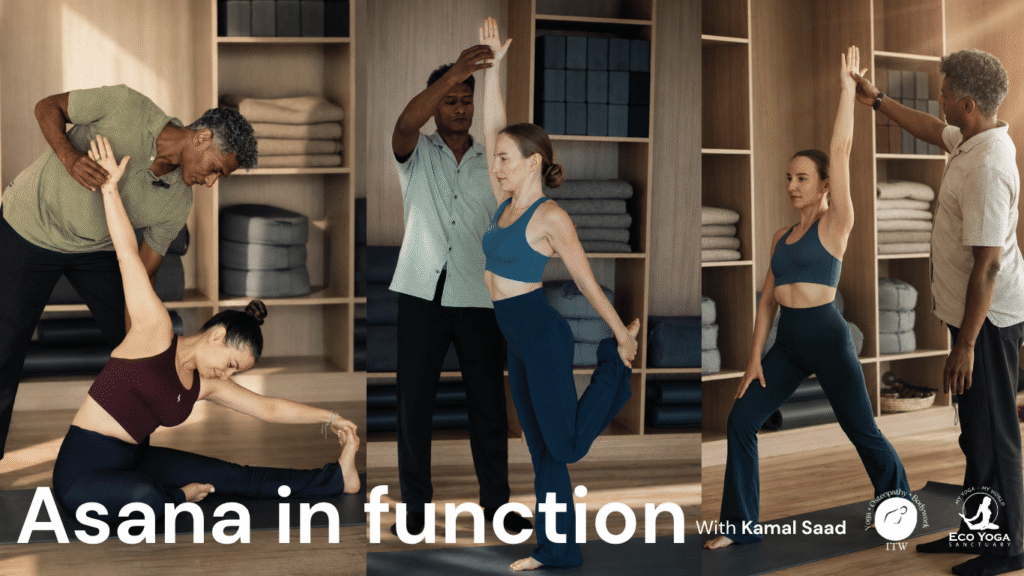
Asana in function series
Positions
Positions
Understanding the difference between position and posture can transform your practice. Position is where your body is placed. Posture is how your body is aligned and held within that position.
Balance in yoga therapy
Balance in yoga therapy
Most people think these two are the same… They’re not. Knowing the difference can completely change the way you practice yoga—and how your body feels afterward.
Cardinal planes
Cardinal planes
Ever wonder why some yoga poses feel effortless while others throw off your balance? It usually comes down to the 3 Cardinal Planes of Movement:
Sagittal Plane: Forward and backward movements (think Paschimottanasana / Seated Forward Fold or Cat-Cow).
Frontal Plane: Side-to-side movements (like Trikonasana / Triangle Pose).
Transverse Plane: Rotational movements (like Ardha Matsyendrasana / Half Lord of the Fishes).
When you structure your practice across all three planes, you build balanced strength, improve joint longevity, and prevent overuse injuries.
Want to dive deeper into how biomechanics can transform your practice or teaching?
Symmetric VS. Asymmetric
Symmetric VS. Asymmetric
In yoga, poses are often either symmetrical or asymmetrical.
Symmetrical poses keep both sides of the body doing the same thing, helping create balance, stability, and awareness.
Asymmetrical poses work one side of the body differently from the other, improving strength, flexibility, coordination, and revealing imbalances that we can gently work through.
A balanced yoga practice includes both—helping you build a body that is not only stronger and more flexible, but also more mindful and aligned.
Cakravakasana
Cakravakasana
is a therapeutic Viniyoga movement that helps: Release lower back tension, Restore lumbopelvic rhythm, Improve spinal mobility, Connect breath with movement Small movement. Big impact.
Axial extension
Axial extension
Axial extension is the foundation of a healthy spine—it creates space between the vertebrae, improves posture, and helps reduce unnecessary compression during movement.
Lengthen first. Move second. Your spine will thank you.
Cobra pose
Cobra pose
Cobra Pose isn’t about lifting your chest as high as possible. It’s about creating a functional, controlled backbend without forcing the lower back.
A few key points: • Don’t chase height — focus on length. • Let the upper back participate in the extension. • Use your back muscles rather than pushing yourself up with your arms. • Keep the movement comfortable and coordinated with your breath. • Remember: the “perfect” shape is not the goal — what the pose is doing for YOUR body is.
In yoga, function comes before form. Your Cobra may look different from someone else’s, and that’s okay.
Righting reflex
Righting reflex
It might not be your hamstrings.
Your body naturally works to keep your head oriented through the righting reflex—and understanding this can completely change the way you approach forward bends.
At Eco Yoga Sanctuary, Jumeirah, Dubai, Integrated Therapy Work explores how breath, support, and awareness—not force— can help you move with greater ease.
Bridge pose